
In an era where consumer behavior changes rapidly, what is digital marketing and why is it so crucial? It is the primary strategy that every business must prioritize, whether a small startup or a large enterprise. The online world has become the main space for researching information, comparing products, and making purchasing decisions. Executing online marketing across various digital channels has therefore become an essential tool for generating sales and building long-term customer relationships.
If you ask what is digital marketing in simple terms, the clearest answer is the strategic use of digital media and technology to communicate a brand, build awareness, and drive sales. This approach relies on customer behavior across each stage of the customer journey—from Awareness to Retention. From a modern marketing perspective, it is not just about running ads; it is an integrated system connecting data, technology, and strategy seamlessly.
To define it clearly, what is digital marketing definition-wise? It refers to promoting products or services through electronic media and digital devices to build awareness and boost sales within a complex, interconnected digital ecosystem. Today, the world has entered the age of Data-Driven Marketing, where marketers rely on real data rather than intuition to make decisions that yield the most accurate results.
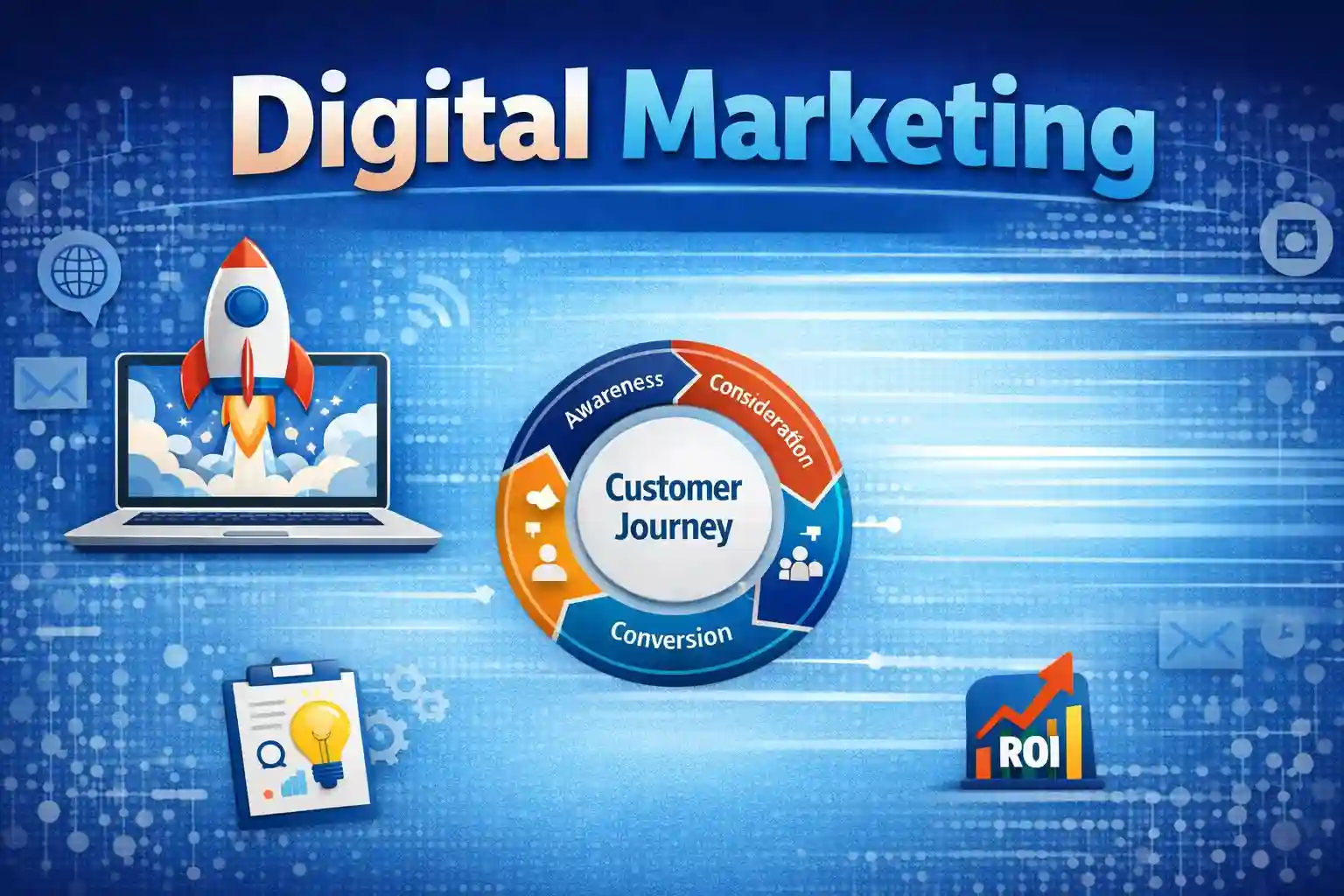
The working principle behind what is digital marketing is building a system that attracts target audiences across various touchpoints, including smartphones, computers, and tablets. It uses the marketing funnel framework to transform strangers into loyal, recurring customers.
A frequent question raised by business owners is: what is digital marketing’s main distribution network? While there are many channels available, the essential core channels include:
The ultimate goal of reaching customers in the digital age consists of three key components: Reach (visibility), Engagement (interaction), and Conversion (closing sales). Missing any of these makes sustainable business growth difficult.
We can categorize digital strategies into several types depending on the objective and communication method.
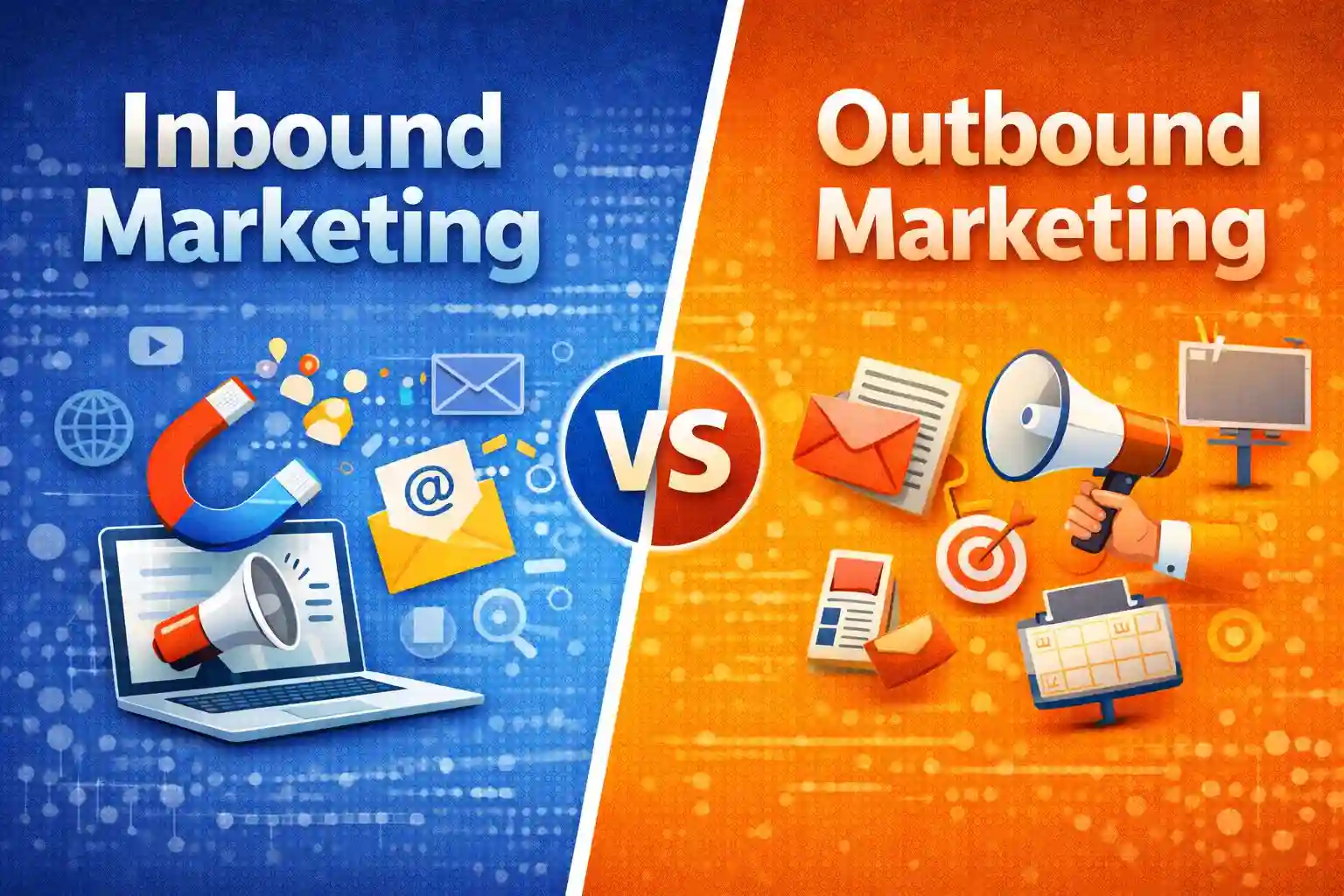
Inbound marketing is a pull strategy designed to attract customers to your brand organically through valuable content, such as SEO articles, videos, or e-books, paired with lead nurturing systems. The core concept is “give before you sell,” creating a positive experience from the moment customers discover your brand through content that solves their problems.
This strategy works hand-in-hand with Content Marketing, SEO, and Marketing Automation to capture leads and convert them into customers over time. In the long run, Inbound Marketing builds long-term trust, brand authority, and lowers customer acquisition costs (CPA) compared to direct advertising.
Conversely, Outbound Marketing is a proactive push strategy—such as display ads, cold outreach, or direct paid campaigns. It focuses on broadcasting messages to a broad audience to quickly drive awareness and sales. This is ideal for situations needing immediate results, such as new product launches or short-term promotions.
Outbound Marketing remains essential because it delivers rapid visibility and manageable budget control. When combined with accurate audience targeting, it balances short-term revenue with long-term growth.
Understanding what is digital marketing strategy involves looking at a structured online plan designed to help a business achieve clear goals—such as increasing sales, building brand awareness, or acquiring new customers.
The core of a digital marketing strategy is not just “making content” or “running ads,” but end-to-end planning. This includes defining the target audience, analyzing competitors, identifying value propositions, and designing a smooth customer journey from initial discovery to the final buying decision.
A strong strategy requires solid planning, measurable KPIs, and a clear roadmap:
To visualize how visitors convert into buyers, we look at the Digital Marketing Funnel, divided into three main stages:
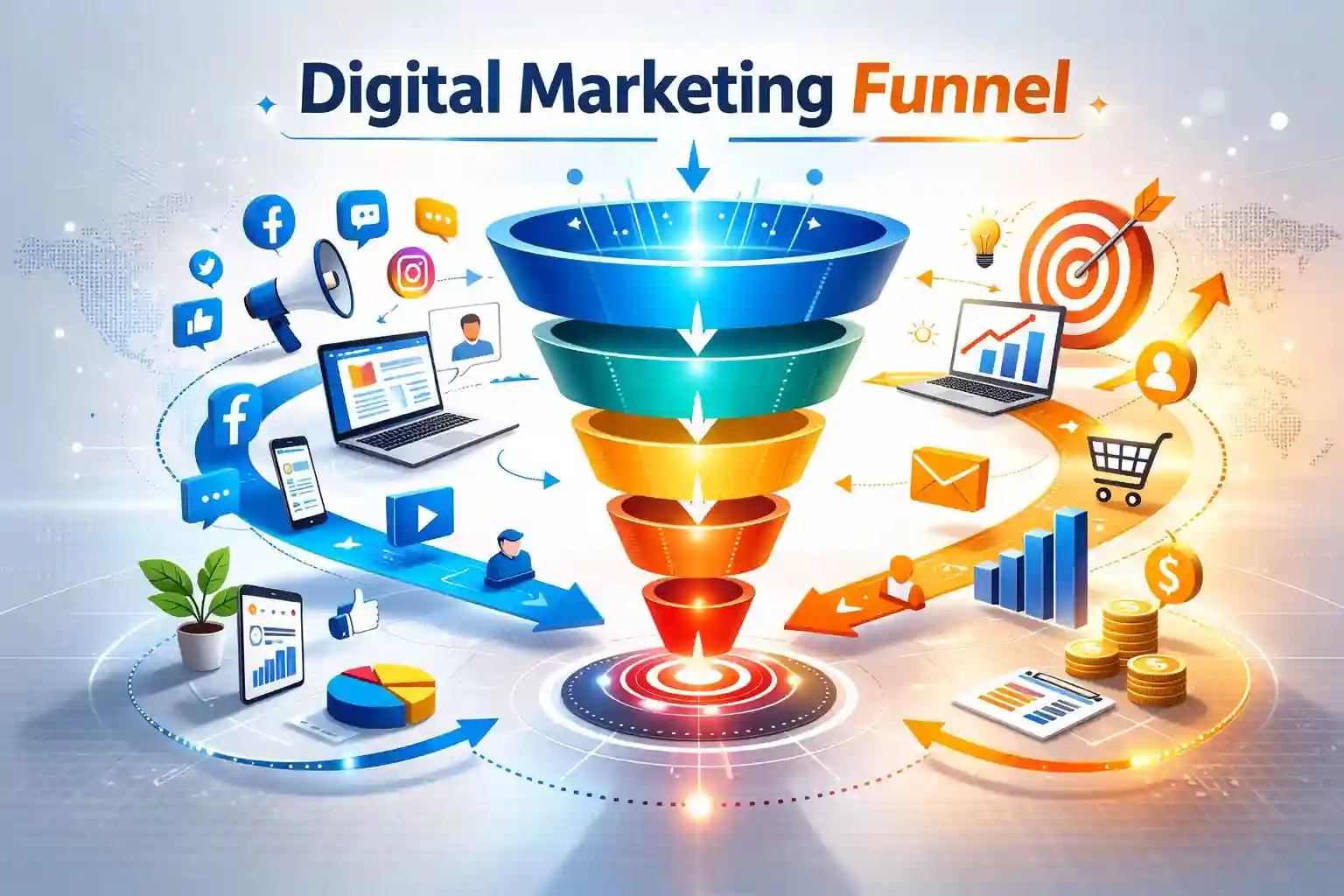
As buyers seamlessly switch between physical stores and online channels, Omnichannel Marketing connects every channel into a unified experience. Unlike Multichannel Marketing, Omnichannel focuses on consistency. Whether a customer starts by seeing a social ad, browses the website for details, or buys in-store, all data is integrated to deliver a personalized, friction-free experience.
As a business grows, managing leads manually becomes inefficient. Marketing Automation uses software to handle repetitive tasks—like automated email workflows or CRM management—to deliver personalized experiences at scale based on user behavior.
Digital Commerce is the full-scale buying and selling of goods and services via digital channels, complete with integrated payment gateways and logistics. Modern e-commerce is no longer just an online store; it is an entire ecosystem connecting storefronts, inventory management, and real-time sales analytics.
When asking what is digital marketing best suited for, the answer is everyone—from startups to large enterprises. Digital channels level the playing field, allowing small businesses with targeted budgets to compete directly with industry giants through precise targeting, transparent analytics, and real-time strategy adjustments.
If your business lacks an in-house expert team, partnering with an online marketing agency provides a fast track to accessing advanced technologies and proven strategies.
An agency handles everything from market analysis and strategy formulation to content creation, media planning, and budget management. Working with professionals reduces trial-and-error risks. Through Performance Marketing expertise, agencies leverage advanced tools—like Google Smart Shopping Ads—to maximize conversions and drive high Return on Investment (ROI).
If you are evaluating which digital marketing agency to partner with, ArioMarketing is the answer. We understand that what is digital marketing performance really comes down to trackable sales and measurable ROI, not just vanity likes. Our team delivers end-to-end strategies tailored specifically to scale your business.
Ultimately, what is digital marketing’s ultimate value? It is an engine that enables precise measurement, real-time adjustments, and targeted reach far superior to traditional media. Every data point helps refine campaigns for continuous improvement, build brand trust, and foster long-term customer relationships. Having a clear digital presence is no longer an option—it is the foundation for sustainable growth.
What is digital marketing? Digital Marketing is the practice of promoting products or services through digital channels such as websites, search engines, social media platforms, and online advertising networks. It relies on data and technology to analyze customer behavior and optimize marketing performance. Unlike traditional marketing, digital marketing allows businesses to measure results in real time, adjust campaigns instantly, and target specific audiences with greater precision. It also provides better budget control and enables marketers to calculate return on investment (ROI) more accurately.
In today’s digital-first world, where consumers research products and make purchasing decisions online, Digital Marketing has become an essential strategy for nearly every business. Whether you’re an SME, startup, or large enterprise, digital marketing helps increase brand visibility, build credibility, and reach new customers more efficiently. Compared to traditional offline advertising, digital marketing offers greater flexibility with marketing budgets, allowing smaller businesses to compete effectively with larger brands through well-planned strategies.
No. Digital Marketing is a comprehensive marketing ecosystem that includes SEO, Content Marketing, Social Media Marketing, Email Marketing, and Marketing Automation. Paid advertising (Paid Ads) is only one component of an effective digital marketing strategy. A successful strategy combines both organic and paid marketing efforts to guide potential customers through the marketing funnel—from Awareness and Consideration to Conversion and Customer Retention.
Yes. One of the biggest advantages of Digital Marketing is its ability to provide accurate, measurable results through analytics tools. Businesses can track website traffic, identify where visitors come from, monitor advertising costs, and measure how much revenue each campaign generates. This data enables continuous campaign optimization and improves return on investment (ROI), making digital marketing significantly more measurable than traditional marketing methods.
The first step is to define clear business objectives, such as increasing sales, building brand awareness, or generating qualified leads. Next, identify your target audience (buyer persona), choose the most appropriate marketing channels—such as SEO, social media, or email marketing—and establish key performance indicators (KPIs) to measure success. A well-structured digital marketing plan from the beginning helps minimize mistakes, maximize marketing effectiveness, and improve the chances of achieving long-term business growth.
Discover more insights on SEO, social media, and web design—read our latest digital marketing articles from Bangkok, Thailand.