
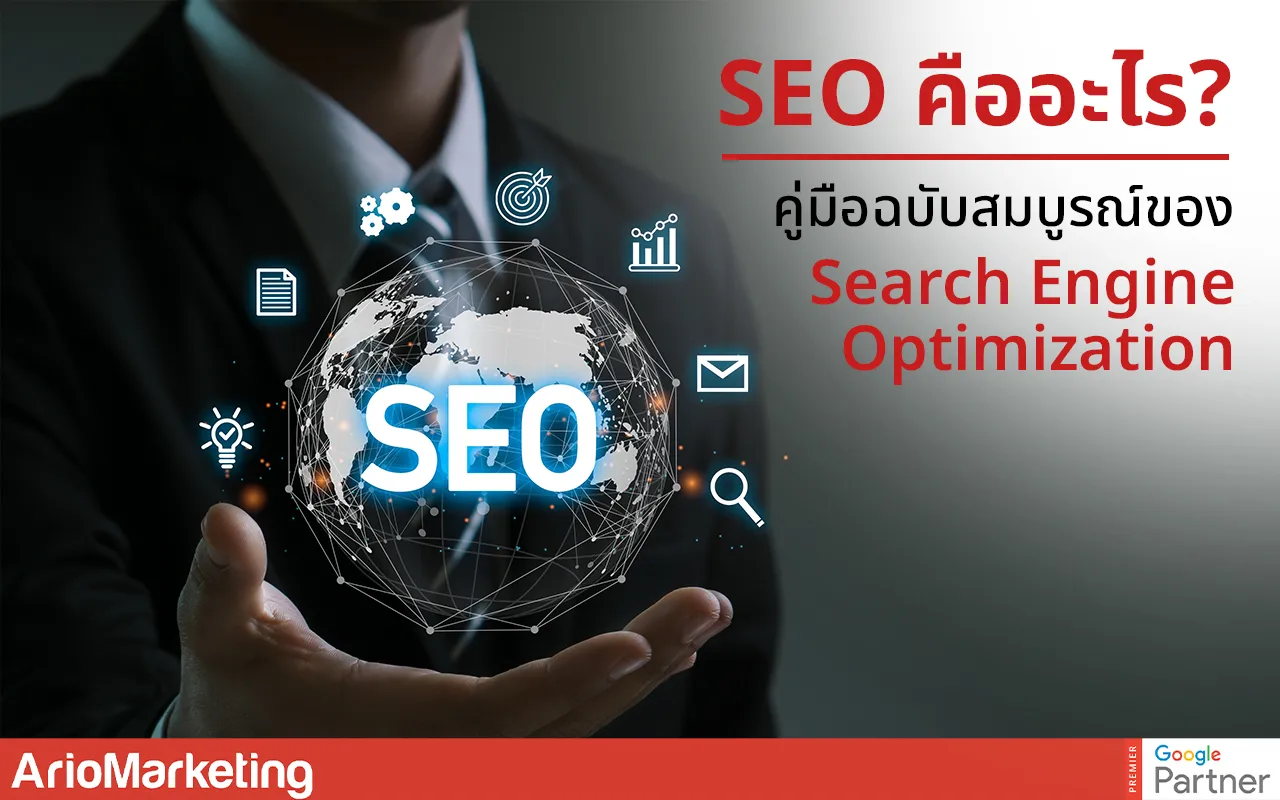
In today’s digital era, where online competition grows more intense every second, the question “What Is SEO?” has become one of the most important starting points for business success. What Is SEO, and why is it important? The simple answer is this: if your website is like a physical store, SEO is the process of moving that store from a quiet side street to a prime location with the highest amount of foot traffic—without paying expensive rent or advertising fees. Search Engine Optimization (SEO) is the process of creating the perfect balance between delivering an outstanding User Experience (UX) and ensuring that Google’s search engine can accurately understand and index your content. For businesses seeking professional support, choosing an experienced SEO agency can provide a strong foundation and deliver the best possible results for achieving higher search engine rankings.
Search Engine Optimization (SEO) is both the science and the art of increasing the quantity and quality of organic traffic to a website through search engines such as Google. If you are wondering, “What Is SEO?”, it is the process of optimizing a website so that it can rank higher in search engine results and attract more relevant visitors. If you ask, “What does SEO mean from a technical perspective?”, it is the practice of understanding what search engine algorithms are looking for and delivering it better than your competitors. Search Engine Optimization is about creating the perfect balance between providing an outstanding user experience and ensuring that Google’s web crawlers (Googlebot) can accurately understand and index your content. This balance ultimately leads to stronger search rankings and greater online visibility.
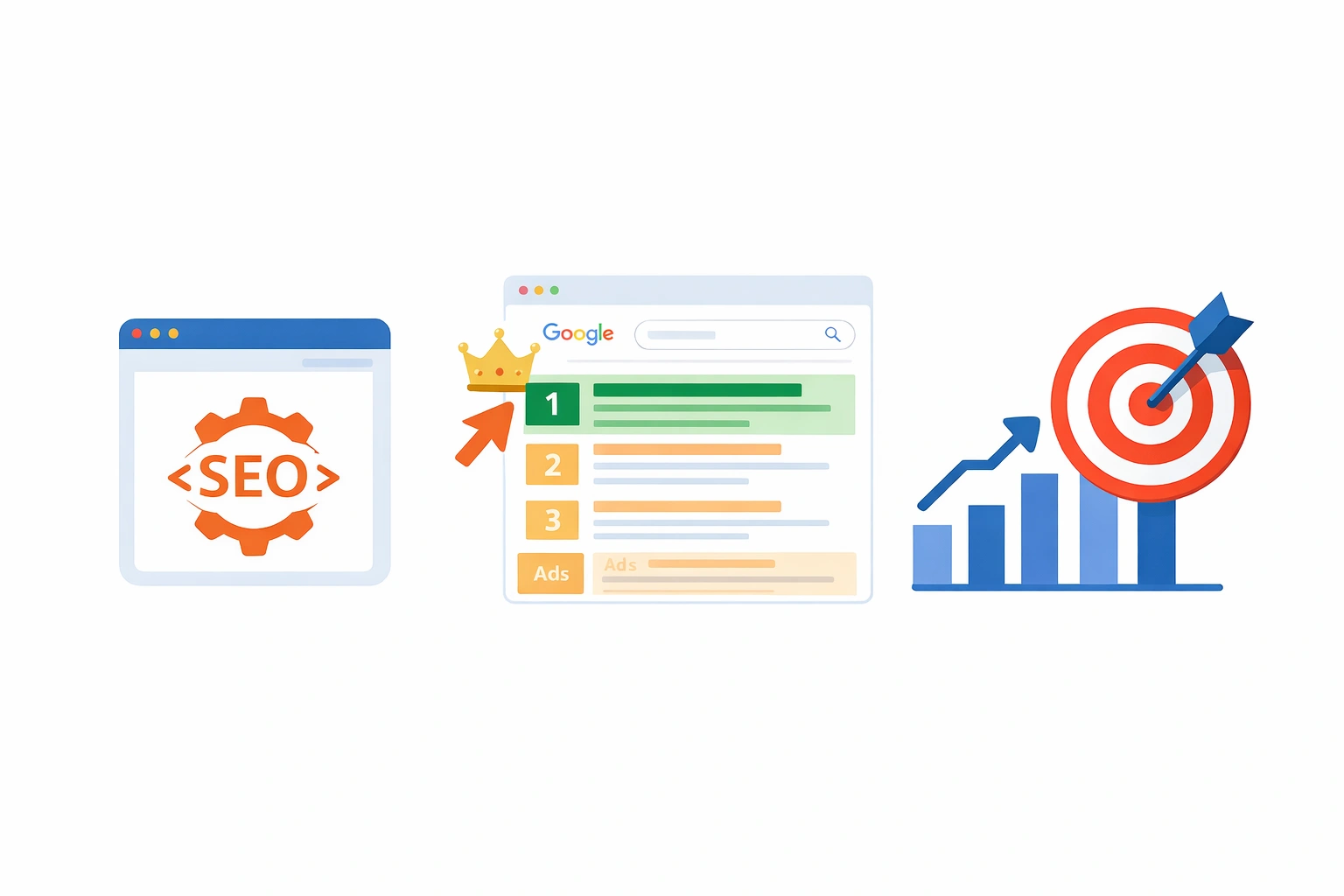
What is SEO? When discussing what SEO (Search Engine Optimization) means, many people still get confused between its technical definition and its practical application in online business. To explain it literally first, SEO stands for Search Engine Optimization. In English terms, the meaning of SEO is “making a website optimally suited for search engines.” However, in practice, what is SEO truly about? Search Engine Optimization (SEO) is the process of strategizing and improving a website to align with the guidelines of Search Engines, such as Google, so that the website has a higher chance of ranking well in organic search results without paying for advertisements.
Consulting a Digital Marketing Agency serves as a shortcut, saving you from wasting time on trial and error.
If translated literally, Search Engine Optimization means “making it the most optimal for search engines.” In essence, understanding what is SEO represents an endless process because user behavior and technology are constantly changing. Therefore, the fact that Search Engine Optimization (SEO) refers to Website Optimization to fit search systems also encompasses creating high-quality content, ensuring fast website loading speeds, and building a network of external credibility.
“What is SEO? The way Google SEO works is like a librarian in the world’s largest library, who must answer readers’ questions as quickly as possible. Every time someone types in a search query, Google processes within a fraction of a second which website is the most suitable. In the near future, we may see changes driven by integration with new technologies like AI Search something marketers must constantly update themselves on and understand further.”
Crawling – Data Exploration
Crawling is the process where Google deploys programs called Googlebots to explore websites across the globe. These bots follow links, read HTML code, analyze site structures, and gather data from new pages or updates to old ones. If a website lacks a solid structure, has no internal links, or blocks bots using a robots.txt file, it can prevent pages from being discovered—which directly impacts any SEO services or efforts.
Indexing – Data Storage
Once Googlebot collects the data, the next step is adding it to a massive database called the Index, which acts like a library’s catalog index. If a webpage lacks quality, contains duplicate content, or loads too slowly, it might not be fully recorded into the Index. Ensuring that pages are correctly indexed is a fundamental cornerstone of search engine optimization; SEO is a process where quality must be prioritized right from the beginning.
Ranking – Page Positioning
The final step is evaluation and ranking when a user performs a search. The system analyzes which content best matches the search query based on relevance and authority. It also considers other critical ranking factors such as website speed, user experience, and the overall quality of backlinks.
What is SEO? Understanding this naturally leads to the next question, What is SERP? SERP stands for Search Engine Results Page. Simply put, when considering what the Google homepage or search results page is, the answer is the interface where Google displays all the websites that match a user’s search query. This page serves as the ultimate battlefield for SEO competition; the higher your position on this page, the higher your Click-Through Rate (CTR) will be, which directly increases your chances of gaining more organic traffic.
In reality, the SERP does not only consist of standard website links; it also includes Featured Snippets, People Also Ask, Local Pack maps, images, videos, and advertisements, all of which influence a user’s decision to click. Understanding the structure of the SERP allows us to analyze Search Intent and optimize content to match the specific format of the results displayed.
Therefore, understanding what the SERP and What Is SEO is and why it matters helps us plan SEO Strategy more effectively, improving our ability to Rank on Google and increasing the opportunity to sustainably dominate space on the Google homepage.
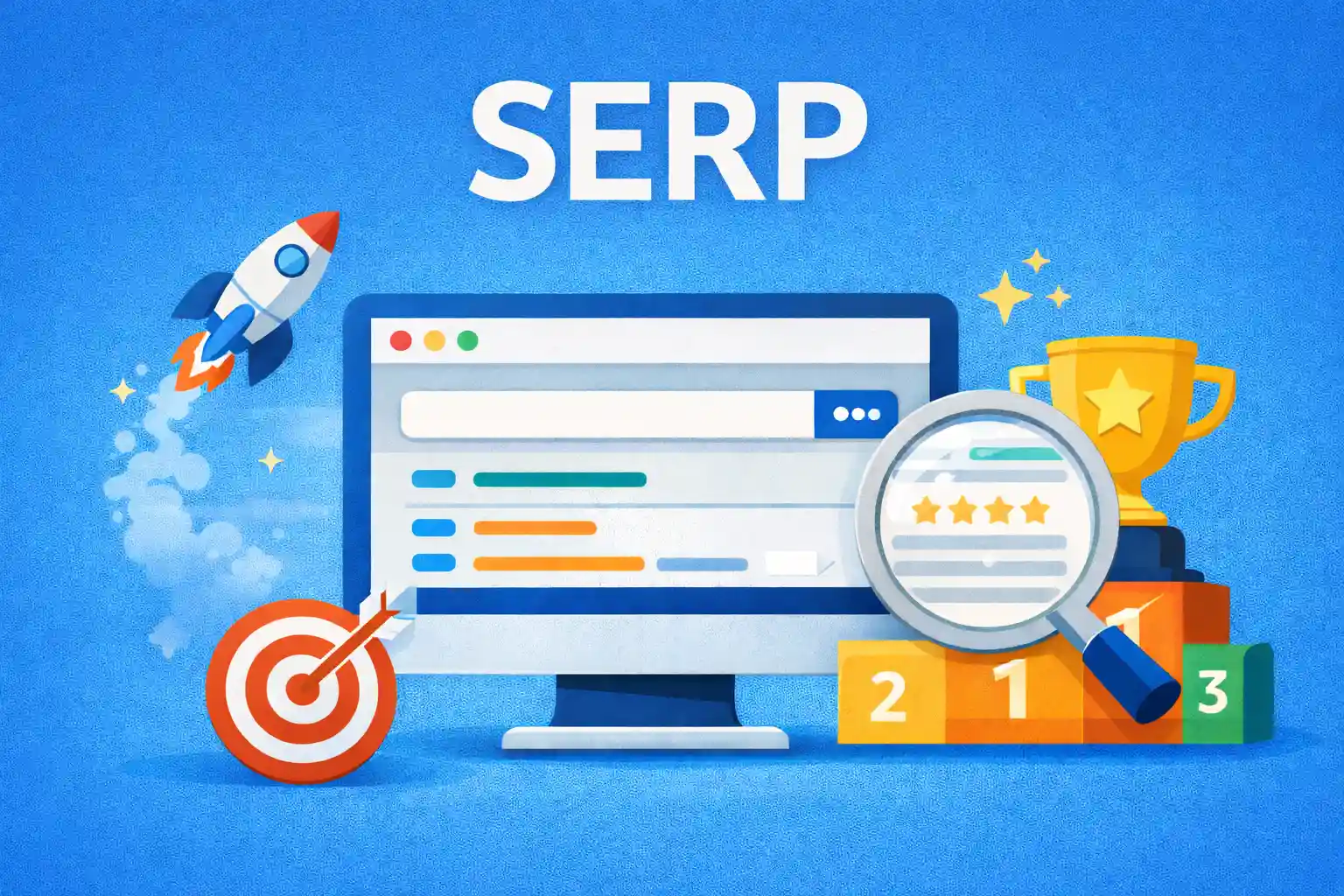
Doing SEO involves managing three main components to make a website as perfect as possible. Many people ask how many types of SEO there are and which type is the best. The answer is that you need to implement all three components together, as follows:
Type of SEO | Core Responsibility | Expected Results |
|---|---|---|
On-Page SEO | Optimizing content and HTML elements within the webpage | Helps Google easily understand what the page is about\ |
Off-Page SEO | Building external credibility and authority (Backlinks) | Increases the website’s authority and trustworthiness |
Technical SEO | Optimizing the website’s technical infrastructure | Enables efficient bot crawling and ensures website stability |
Optimizing everything located ‘on our webpage,’ from inserting keywords into the Title Tag to creating high-quality articles. Doing On-Page SEO serves as the critical foundation that signals the algorithm that your website is the absolute best answer for users.
Off-page SEO involves executing activities outside of your own website to earn trust and credibility signals back. The absolute heart of this process for Off-page SEO is backlinks. If reputable websites link back to us, Google views our site as a trustworthy source of information. Many often wonder if backlinks are still important; the answer is that they remain highly critical in 2026, but they must be quality links only.This is why leveraging professional Backlink Services has become essential for securing high-authority, penalty-free connections
Technical SEO refers to managing the backend of a website to maximize its efficiency in being discovered and indexed by search engines. When defining what technical SEO is, it encompasses creating an XML Sitemap, configuring Robots.txt, and organizing the URL structure to ensure it is not overly complex.
At present, Core Web Vitals are key factors that Google uses to evaluate user experience (UX). They consist of three core components: LCP (loading speed), CLS (visual stability of the webpage), and INP (responsiveness to clicks). If you ask how fast a website needs to be, the answer is the faster, the better as it directly impacts your rankings.
In online business, choosing your path in doing SEO is a decision that directly impacts the future of your website. White Hat SEO can be compared to building a house on a solid foundation according to Google’s rules and regulations, while Grey Hat SEO often involves taking shortcuts that risk facing severe penalties.
Comparison Topic | White Hat SEO (White Hat) | Grey/Black Hat SEO (Grey/Black Hat) |
|---|---|---|
Guidelines & Practices | Strictly follows Google Webmaster Guidelines. | Attempts to find algorithm loopholes to cheat rankings. |
Sustainability | Becomes a valuable digital asset in the long run. | Requires constant evasion and fixing whenever caught. |
Content Focus | Focuses on creating value for real users (User-Centric). | Focuses on optimizing solely for search bots (Bot-Centric), such as Keyword Stuffing. |
Backlink Strategy | Earned naturally through high-quality content. | Buying links, using Private Blog Networks (PBNs), or spamming comments. |
Time to See Results | Takes longer (4-12 months) but is highly sustainable. | Yields quick results in the short term, but rankings are usually unstable. |
Risk Level | Extremely low; safe from major algorithm updates. | Extremely high; risks getting demoted or permanently banned by Google. |
SEO strategies in 2026 place a strong emphasis on understanding context and satisfying user needs rather than just repeating keywords over and over. If you are wondering What Is SEO in today’s digital landscape, the answer goes far beyond keyword optimization. Modern SEO is about delivering the best possible user experience while providing valuable, trustworthy, and relevant information. This concept is not limited to content creation; it extends to building a website’s foundation right from the start. This includes site structure, loading speed, user-friendliness, and selecting a Domain for SEO that clearly reflects your brand identity and credibility. Because a domain is the starting point of the user experience, having a domain name that is easy to read, easy to remember, and directly communicates your business image helps build trust even before a user clicks through to the website. This perfectly aligns with modern SEO strategies that prioritize quality over word volume and reinforce the true meaning of What Is SEO.
To fully understand What Is SEO, it is also important to understand Semantic SEO and Topical Authority. While these two concepts are distinct, they are deeply interconnected. Semantic SEO refers to creating content that comprehensively covers the context of a topic, rather than just focusing on isolated words. On the other hand, building Topical Authority means demonstrating to Google that your website is a trusted authority in a specific subject. This is achieved by systematically creating interconnected Content Clusters that help search engines understand your expertise and improve your visibility for a wide range of related search queries.
Another key concept to understand when learning What Is SEO is Google’s E-E-A-T framework. It serves as a quality evaluation guideline that Google uses to assess whether content deserves to rank highly in search results. E-E-A-T consists of:
A highly popular question after understanding What Is SEO is: how many months does it take for SEO to work? The answer is typically around 4–6 months to see tangible results. For smaller businesses, focusing on SEO for SMEs by targeting niche keywords can yield faster results and rankings than competing in a mass market.
Conversely, in highly competitive landscapes such as Real Estate SEO it requires significantly more time, patience, and budget for content creation or authority building to successfully break into the first page. Once you understand What Is SEO, you will realize that SEO is a long-term strategy rather than a quick fix. How to Do SEO by Yourself
For beginners, you can learn How to do SEO by yourself through various free articles and online courses to apply to your business website.
Additionally, understanding your specific business context is crucial. For instance, if you operate a medical facility, planning a Clinic SEO strategy requires a particular emphasis on accurate medical knowledge and the credentials of expert physicians, strictly adhering to E-E-A-T guidelines.
To get your website ranked, the core pillars are laying out a proper site architecture and conducting keyword research that aligns with your target audience’s search behavior. Fundamentally, you need to categorize your web content clearly so that both users and Googlebots can navigate it seamlessly. Each industry may require slightly different optimization details; for instance, if your website features a massive catalog of product pages, applying E-Commerce SEO principles to manage URL structures and filtering systems will reduce complexity, prevent page cannibalization, and drive better rankings.
Beyond structural technicalities, creating content that satisfies search intent is a vital practice for every business. Whether you sell products, offer services, or run an educational platform, grouping content into “Content Clusters” to build internal topical relevance is essential. Take inspiration from Tourism SEO, which often succeeds by systematically grouping location guides, reviews, and seasonal recommendations together. This content organization model can be seamlessly adapted to any general business website to increase dwell time and exceptionally boost your site’s credibility in the eyes of Google.
For WordPress (WP) users a content management system (CMS) natively designed to be SEO friendly properly optimizing your setup can skyrocket your ranking opportunities. In addition to installing popular plugins like Yoast SEO or Rank Math, which act as personal assistants for managing Meta Titles, Meta Descriptions, and automatically generating XML Sitemaps, there are critical elements of WordPress SEO that you should never overlook:
When learning the ropes of digital marketing, discovering what is SEO is just the first step. Doing SEO without data analysis is like driving in the dark without headlights. Free tools from Google are essential, foundational weapons that every SEO specialist and website owner must install to measure results and refine strategies with sharper precision. The core tools that need to be used in tandem include:
While GA4 analyzes user behavior on your website, Google Search Console (GSC) is a free tool that measures performance on Google Search Engine Results Pages (SERPs). It serves as a direct communication line between your site and Google, offering essential features:
Performance Analysis: Tracks search queries that lead users to your site, measuring clicks, impressions, CTR, and average position.
Indexing Status: Verifies if Googlebots have indexed your pages and promptly alerts you via email about crawl errors like 404 pages or server issues.
Sitemap Submission: Allows you to submit XML sitemaps or individual URLs to accelerate Google’s indexing process for new or updated content.
Page Experience & Core Web Vitals: Evaluates mobile usability, page speed, and stability, which are critical ranking factors for Google’s algorithm.
Combining GSC insights with GA4 perfectly maps your customer journey from the initial search query on Google to the final conversion on your website.
The comparison between Google SEO and Google Ads is essentially a comparison between “sustainability” and “speed.” Both strategies possess different strengths and can be seamlessly integrated to deliver a perfect marketing outcome. Combining SEO and Google Ads is therefore another crucial strategy for businesses.
Comparison Topic | SEO (Organic Search) | Google Ads (Paid Search) |
|---|---|---|
Speed to Results | Slow (requires time to build authority and trust). | Extremely fast (ranks instantly once the campaign is launched). |
Cost Structure | Costs are driven by content creation and time (Traffic is free). | Pay every time someone clicks (Pay-Per-Click / PPC). |
Continuity | Once ranked, visibility remains sustainable over the long term. | Traffic disappears immediately once you stop paying. |
Credibility | High (users tend to trust organic search results more). | Moderate (users are aware that it is a paid advertisement). |
Audience Control | Controlled through targeted content creation. | Offers highly precise and detailed audience targeting options. |
ROI (Value) | Highly cost-effective in the long run (High ROI). | Best suited for driving short-term sales and immediate conversions. |
In the world of online marketing, Marketing SEO is a vital gear used to attract highly qualified prospects to your website. It serves as an inbound marketing strategy that delivers cost-effective results and drives down advertising costs over the long term.
When looking for professional results, the ultimate question is, ‘Which SEO company should I hire?’ A simple rule of thumb is to choose a partner that offers transparent strategies, delivers measurable results, and truly understands the core of your business.
With our experience and professionalism at ArioMarketing, we specialize in crafting comprehensive, fully traceable, and measurable strategies. We support you across every dimension from in-depth competitor analysis and creating content that captivates your target audience, to establishing a rock-solid website foundation. Our ultimate goal is to steadily elevate your search rankings and drive sustainable business growth.
SEO is the process of optimizing a website to align with search engine ranking systems like Google, allowing the site to rank in organic search results without paying for ads. The difference from standard website development is that a regular website might focus solely on aesthetics or basic functionality. In contrast, SEO simultaneously takes into account website structure, speed, keyword deployment, content quality, and user experience. Without SEO, a website may go completely undiscovered, no matter how beautiful its design or how good its products are.
Generally, SEO begins to yield results within 4 to 6 months, depending on several factors such as keyword competition, pre-existing website quality, and the strategies implemented. In highly competitive markets, it can take up to 8 to 12 months. However, SEO is a long-term investment. Once a website successfully ranks, it can continuously generate traffic without additional ad spend, unlike Google Ads, where traffic stops the moment you stop paying.
SEO and Google Ads share a similar goal: increasing visibility on the first page of Google. However, they differ in execution. SEO focuses on long-term results and credibility, while Google Ads emphasizes speed and highly specific audience targeting. Businesses that need immediate sales might use Ads alongside SEO in the beginning. In the long run, however, SEO typically offers a higher ROI because the traffic generated does not require ongoing costs per click.
It is highly necessary because all three components work hand-in-hand. On-Page SEO helps Google understand your content, Off-Page SEO builds credibility through backlinks, and Technical SEO ensures the website loads quickly and can be crawled efficiently. If any single part is missing, the website may fail to compete on the first page. Effective SEO must therefore be planned holistically, rather than just focusing on stuffing keywords.
Doing SEO by yourself is entirely possible if you have the time to learn and experiment continuously, especially for small websites or startup businesses. However, SEO is complex and requires constant adaptation to Google’s algorithm updates. Businesses looking for fast, precise, and accurate results often choose to hire experts or an agency to map out in-depth strategies, analyze competitors, and correctly structure the website. This reduces risks and accelerates the opportunity to rank faster.
Discover more insights on SEO, social media, and web design—read our latest digital marketing articles from Bangkok, Thailand.