
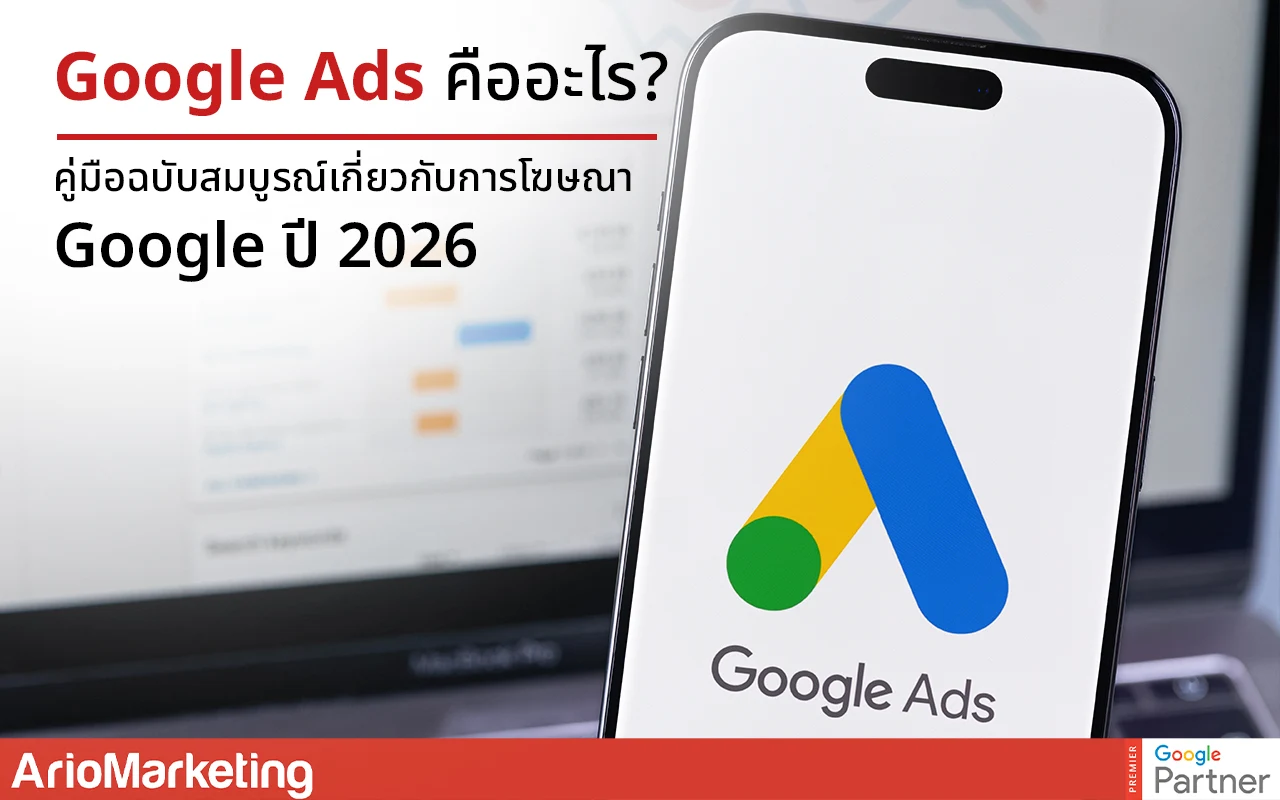
In today’s AI-driven digital landscape, understanding what Google Ads is goes far beyond simply “running ads.” It means understanding the world’s most advanced search and advertising ecosystem. So, what Google Ads is in 2026? It is the most powerful online advertising platform, enabling businesses of all sizes to reach potential customers at the right moment (Winning Intent). By processing vast amounts of data, it delivers highly relevant experiences to users. Many businesses also wonder how to use Google Ads effectively. The key lies in combining a strong marketing strategy with the platform’s intelligent automation features.
To explain what Google is today and how it works, we must look beyond its identity as a mere search engine and see it as a “Life Companion”—a digital partner that answers every human question, from daily trivia to complex purchasing decisions. Because Google serves as the primary gateway used by millions of people every second, its space has become the most valuable digital real estate in existence.
A business’s decision to advertise on Google isn’t just about boosting website traffic; it is about building credibility and achieving maximum brand awareness (Top of Mind). While other social media channels focus on stimulating desire through photos and videos (Disruption Marketing), Google Ads services stand out in the realm of SEM (Search Engine Marketing). SEM caters directly to users who already have a clear need. For many organizations, Google Ads is the heart of their SEM strategy because it is the exact tool that places a brand right in front of customers with explicit intent.
A Search Term is the key that connects a consumer’s problem to a business’s solution. It refers to the actual words or phrases that users type into the search bar or speak aloud via Voice Search. Today, Google’s AI system can analyze the “Intent” behind those words, going In terms of advertising, what is Search Term? It represents the raw data that marketers must analyze to identify and bid on the right keywords. If we understand how customers use search terms, we can instantly optimize our landing pages and ad copy to match their needs. This makes our ads more relevant and effective while reducing the Cost-Per-Click (CPC), as Google’s system recognizes that we are delivering genuinely useful information to its users.
In general, Google Ads is a platform that combines data, user behavior, and AI into a single ecosystem, and Google Ads is an advertising system that provides accurate real-time performance measurement.
The term “Ads,” or online advertising, in the context of 2026 refers to a highly targeted form of communication that focuses on measurable results. So, how many types of ads are there today? Online advertising is essentially a one-to-one communication channel delivered through digital devices, with its core principle centered on using data (Data-Driven Marketing) to identify the characteristics, interests, and behaviors of target audiences.
Effective advertising in today’s era should not make users feel annoyed or interrupted. Instead, it should feel like receiving a useful recommendation. Google Ads has been highly successful in making advertisements blend naturally with regular content through Native Ads, whether in the form of text-based ads displayed on search engine results pages or banner advertisements appearing on websites where users are genuinely interested in the content they are viewing. If you are still wondering how to get started with Google Ads, the most important foundation is understanding what problem your advertisement is solving for users through one of the key advantages known as the benefits of online advertising.
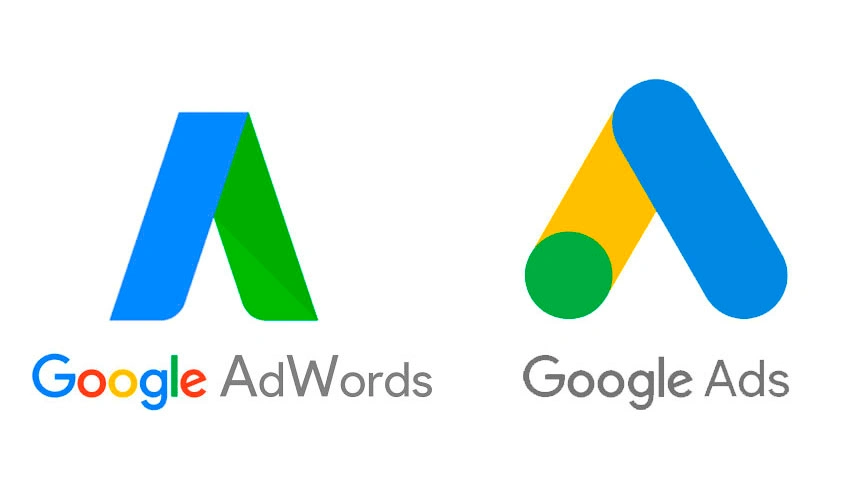
Many people still recognize the name Google AdWords and wonder whether it is still in use. In reality, Google rebranded the platform as Google Ads to reflect its expanded advertising ecosystem. For those asking what is Google Ads, it is Google’s online advertising platform that helps businesses promote products and services across Google’s channels and partner networks. The shift from AdWords to Google Ads was more than a name change. While AdWords focused mainly on keyword bidding and search ads, Google Ads now supports a multichannel, AI-driven approach. The benefits of Google Ads still include increasing visibility in search results, but the platform now also integrates Search, YouTube, Gmail, Google Maps, and millions of partner websites. Advanced Machine Learning automates bidding, targeting, and campaign optimization, making advertising more efficient than the largely manual processes of the AdWords era.
Feature | Google AdWords (Former) | Google Ads (Current/2026) |
|---|---|---|
Main Focus
| Focused on text-based search advertising (Keywords) | Focused on multiple advertising channels (Multichannel) |
How It Works | Manual optimization (Manual Bidding) | Powered by AI and Smart Bidding |
Advertising Channels | Basic Search & Display Ads | Search, Display, YouTube, Maps, PMax |
Measurement | Basic measurement based on clicks | AI-powered measurement with advanced Conversion Tracking |
What is Google Ads? Google Ads is Google’s intelligent online advertising platform, helping businesses promote products and services across Google Search, YouTube, Google Maps, and millions of partner websites. Rather than ranking ads solely by bid amount, Google Ads also evaluates ad quality and relevance.
Understanding how Google Ads works is essential. Every search triggers a real-time ad auction, but the highest bidder does not automatically win. The system combines bid amount and Quality Score to determine ad rankings.
When users search for relevant keywords, ads enter an auction against competitors. Ads with strong relevance, high-quality content, and fast-loading landing pages are more likely to achieve top positions. This allows small businesses to compete effectively, even against larger brands.
A common question is how to choose the right bid. In 2026, Google Ads relies heavily on AI-powered Smart Bidding rather than manual CPC bidding. The system automatically adjusts bids to maximize conversions or achieve a target ROAS. Choosing the right bidding strategy depends on one key question: What is your campaign goal?
Quality Score is a rating from 1–10 that measures ad effectiveness. It is based on three factors: expected CTR, ad relevance, and landing page experience. A higher Quality Score can reduce advertising costs and improve ad rankings. Google Ads rewards relevant, high-quality ads that deliver a better user experience.
If you ask how many types of Google Ads there are and how each type is different, Google Ads offers various advertising formats designed to meet different business needs:
Text-based ads that appear when people search for relevant keywords. They are the core of Google SEM, helping drive users from the SERP (Search Engine Results Page) to your website at the moment when they have the highest purchase intent.
An example of GDN is visually appealing banner ads that appear on news websites or YouTube. Using the Google Display Network helps your brand reach millions of people at a cost-effective rate and strengthens your SEO strategy by building brand awareness and recognition.
Also known as “retargeting ads,” the principle of remarketing is to show ads repeatedly to people who have previously visited your website but have not yet made a purchase. This encourages them to return and continue the customer journey until they complete the desired action.
Many people wonder: Is PMAX good? PMAX is an AI-powered campaign that automatically distributes ads across all Google channels (Search, YouTube, Display, and Maps). It is highly suitable for businesses that want to maximize sales and prefer a more convenient way to manage their advertising budget.
For business owners, the most important question is: Is running ads worth it? To answer that, it is important to first understand what is Google Ads. Google Ads is an online advertising platform that allows businesses to reach potential customers at the exact moment they are searching for products or services. The value of Google Ads lies in its “accuracy” and “speed.” You can bring your business to the first page of search results instantly without having to wait months for SEO results. Regarding the question “Can small businesses run ads?” The answer is definitely yes. You can control your own budget, and even starting with only a few hundred baht per day can generate results if managed correctly. This is one of the key benefits of Google Ads that plays an important role in marketing for business owners. Google Ads is an opportunity to generate sales quickly, and Google Ads is an investment that allows you to control costs and measure real performance.
A key question is which businesses should use Google Ads, especially for location-based campaigns targeting “near me” searches. To understand What Is Google Ads?, it is important to know that the platform connects businesses with users actively searching for products, services, or solutions.
Google Ads is most effective for businesses that solve problems or meet immediate customer needs. Since people search Google when they are ready to find answers or make decisions, it performs particularly well in densely populated areas like Bangkok, where local searches are common.

These types of businesses can gain the most benefits from running location-based Google Ads through Local Search Ads and Google Maps pin placements. This helps attract people from the online world to the actual storefront (Online-to-Offline), which is a key strategy for local businesses in urban areas.
Conversion Tracking is a system that tracks the results that occur after users click on an advertisement, whether it is filling out a form, making a phone call, purchasing a product, signing up for a membership, or even clicking a contact button through LINE. Simply put, it is a tool that helps us understand whether the ads we run are “actually effective or not.” For many Google Ads users, there is still confusion about what a conversion is and how to measure it to determine whether an advertisement is truly generating results. Setting up Google Ads Conversion Tracking is considered a key element of professional advertising because it transforms ad campaigns from “guessing” into “making decisions based on real data
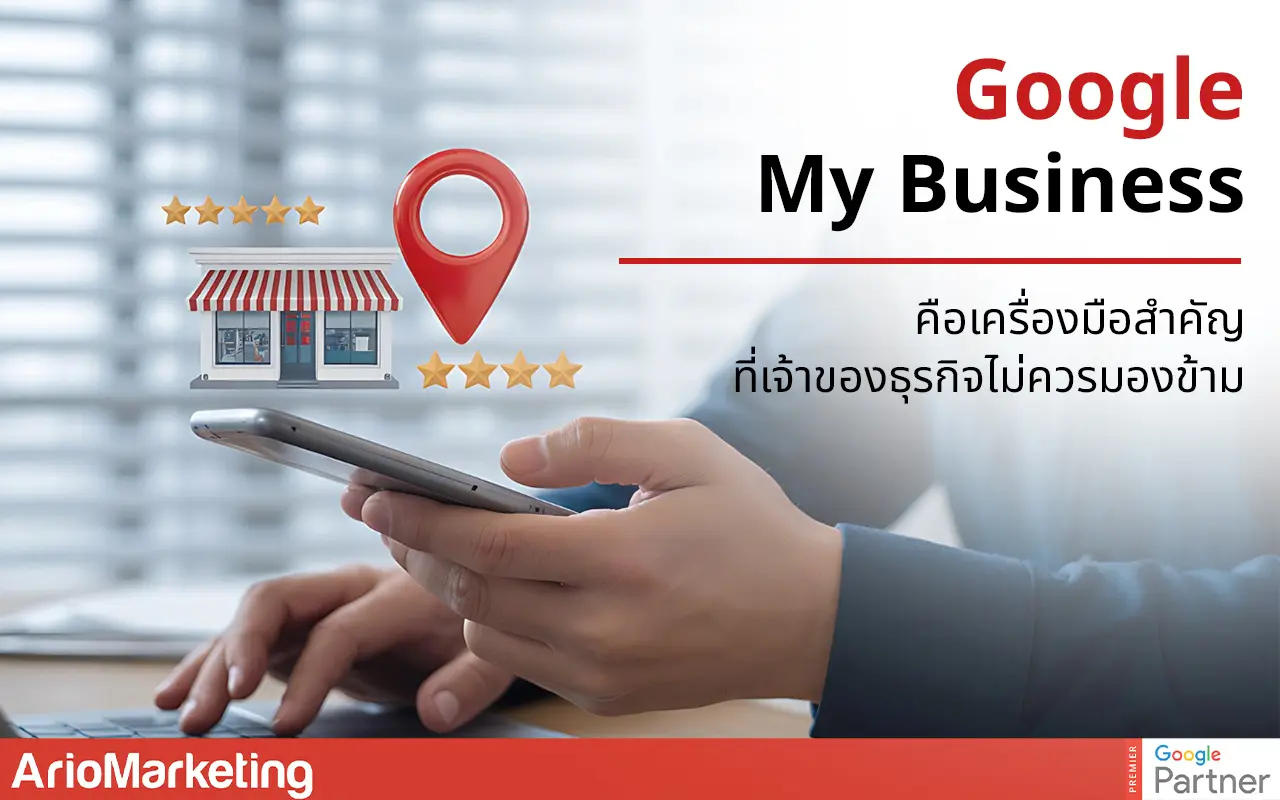
Many people may still wonder, what is Google Review? It refers to the comments and ratings from real customers that appear on Google Search and Google Maps. Google My Business & Reviews are the core elements of modern local SEO because they are among the first things users see when searching for businesses in the same area, whether it is a store, clinic, company, or specialized service. Many people may still wonder, what is Google My Business, what GMB is, and whether Google Reviews are important — the answer is: they are extremely important and directly impact both search rankings and customers’ purchasing decisions.
Google My Business (GMB) is a tool from Google that helps businesses display their information on Google Search and Google Maps, such as business name, address, phone number, opening hours, photos, and reviews from real customers. When Google My Business & Reviews are properly managed, businesses appear more trustworthy and can reach nearby customers more easily and immediately.
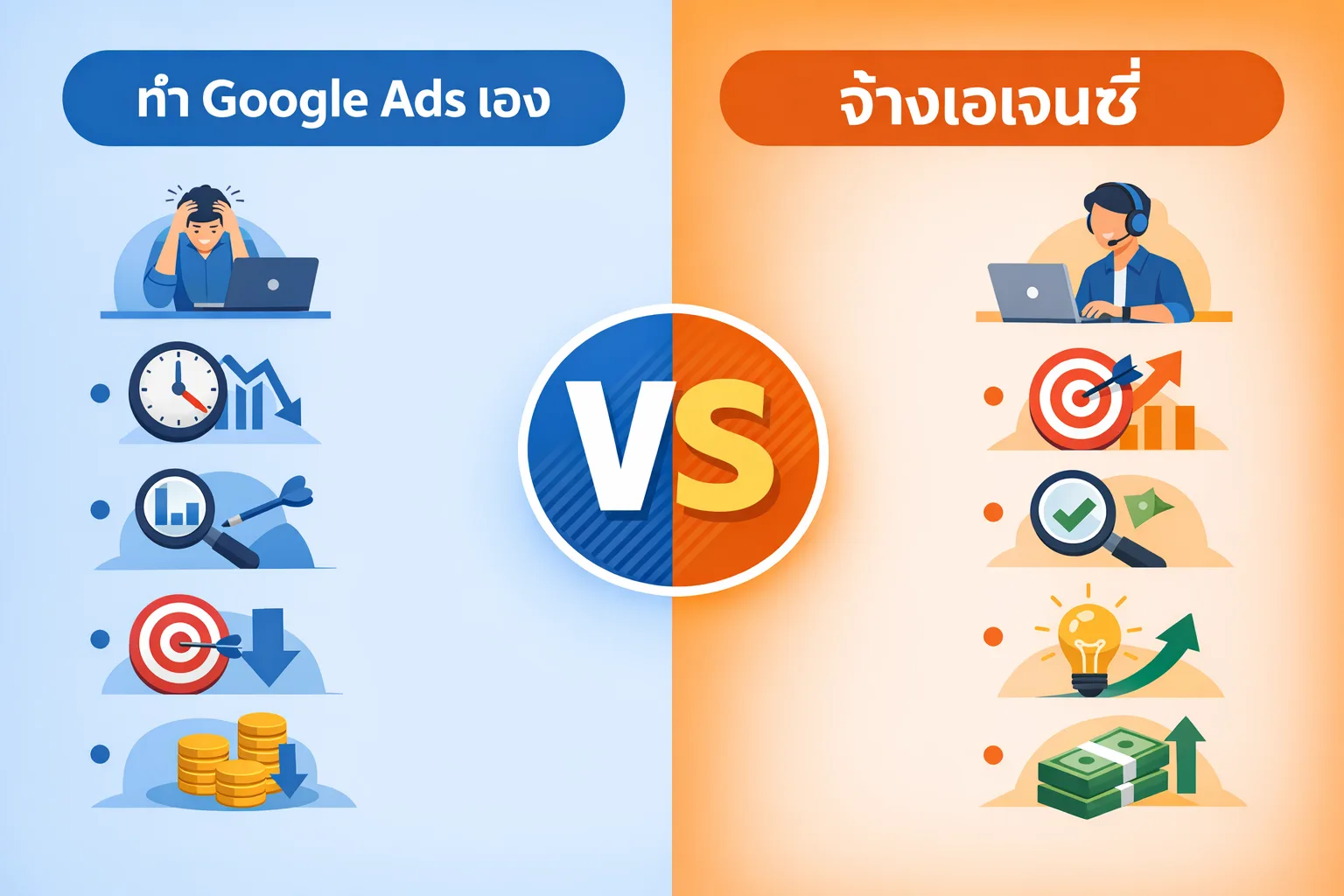
Many people ask what is Google Ads?, whether they can manage it themselves or if they should hire an agency. Choosing an experienced Google Ads agency can significantly reduce risks. Managing ads on your own may save on service fees, but it requires a considerable amount of time to learn and understand the system. For those who want to get started, they can learn the basics from Google Digital Garage, a free digital learning platform from Google. Meanwhile, finding an expert to manage and monitor who handles your advertising campaigns can help you save valuable time. For many businesses, Google Ads is a key tool for generating online revenue, and Google Ads is a channel that requires expertise in strategic planning to achieve accurate targeting and reduce the chances of wasting money due to incorrect settings. Therefore, hiring a Google Ads agency is the right solution that meets the needs of many businesses.
Comparison | Run Google Ads Yourself | Hire an Agency |
|---|---|---|
Expertise | Limited (requires trial and error) | High (experience across multiple industries) |
Time Required | More time needed (must learn and update knowledge yourself) | Less time required (business owners can focus on other tasks) |
Cost | Saves agency fees but risks wasting ad budget | Requires service fees but helps optimize ad spending |
Performance Tracking | May not have in-depth tracking | Provides accurate tracking and measurement setup |
Technology Updates | Slower (must follow updates independently) | Faster (access to the latest tools and Google partner expertise) |
As a Google Ads agency, Ariomarketing is ready to answer all your questions about Google Ads, including What Is Google Ads?, and provide complete support from planning and campaign setup to actual performance measurement. We do not focus only on clicks, but prioritize conversions and the real profit generated for your business. By combining AI technology with a team of professional specialists, Ariomarketing is the agency that helps answer the question: who can manage your advertising investment most effectively? We ensure that every baht you invest is transformed into measurable results and sustainable business growth. We provide comprehensive Google Ads Bangkok services, including:
Google Ads targets users with clear purchase intent by showing ads when people search for related keywords. It is effective for generating leads and sales. Facebook Ads focuses on brand awareness and reaching new audiences based on interests, behaviors, and demographics. The best choice depends on your goal: Google Ads for conversions, Facebook Ads for awareness and engagement.
There is no fixed minimum budget. Small businesses can start with a few hundred baht per day. Results depend on campaign setup, keyword quality, conversion tracking, and Smart Bidding not just budget size. A well-optimized campaign can perform effectively with a limited budget.
Yes, but it requires time to learn and test. Without knowledge of targeting, bidding, and tracking, budgets may be used inefficiently. Specialists or agencies can help reduce risks and improve results, while beginners can start with smaller campaigns to gain experience.
Yes. While social media builds awareness, many customers use Google when they are ready to research and buy. Google Ads helps drive conversions through Search, Google Maps, reviews, and other Google marketing tools.
One of the advantages of Google Ads is its fast results. Businesses can usually start seeing data within a few days after launching a campaign. However, determining whether a campaign is truly effective requires at least 2–4 weeks of data, allowing the AI system to learn user behavior and optimize bidding strategies. Performance evaluation should focus on conversions and ROAS rather than clicks, as these metrics provide the clearest view of actual business results.
Discover more insights on SEO, social media, and web design—read our latest digital marketing articles from Bangkok, Thailand.